Back to all resource providers


All resources from National Highways

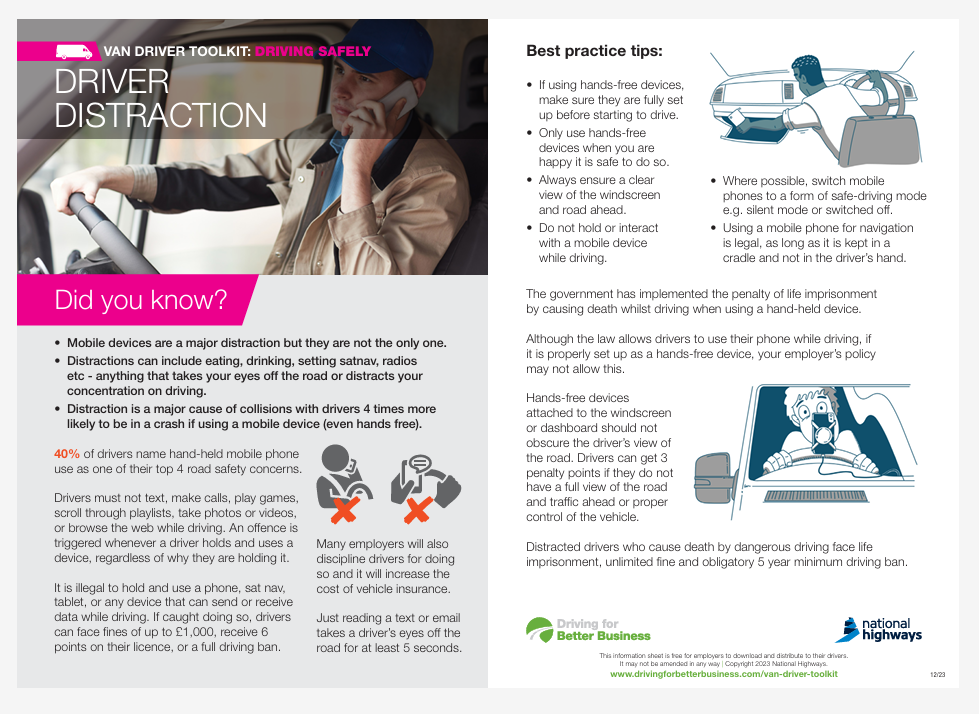
Distraction is a leading a cause of collision. Whether manual, visual or cognitive, a distracted driver is not in full control of their vehicle, nor able to process and adapt to the changing environment around them. Fleets should educate drivers about the huge risks associated with distraction, and ensure that drivers have safe ways of alleviating boredom while they drive. Fleets policies should emphasise the ‘no mobiles while mobile’ rule, and ensure that sat navs and workflows are programmed before the journey starts and mobiles are turned off. Simply put: the human brain doesn’t multi-task. If you are doing something else, you aren’t driving.

National Highways

Fleet Safety Focus – Distraction

Driver Distraction – does everyone understand their responsibilities? Driving is, for most people, the most dangerous activity they do. How confident are you that your drivers will not be distracted when driving? Do you have a strict no-mobile policy, which requires phones to be turned off or blocked while driving?    

National Highways

Fleet Safety Focus – Driver Distraction

Driver fatigue may be a contributory factor in up to 20% of road incidents, and up to one quarter of fatal and serious incidents. It’s a huge risk for fleets, drivers and for the general public – and commercial vehicle drivers are vulnerable to fatigue due to demanding workloads and high mileage. Our fleet safety updates help those who manage and run fleets understand what steps they should take to manage driver fatigue

National Highways

Fleet Safety Focus – Driver Fatigue

Anyone driving for work, and the company which employs them, has a responsibility to ensure that their vehicle moves safely around other road users, and in particular vulnerable road users. Recent changes to the Highway Code created a hierarchy of road users which means those who can do most harm – usually the largest vehicles – have the greatest responsibility for road safety. Conversely, those who are most vulnerable need to be treated with the greatest caution. Pedestrians, cyclists, motorcyclists and horse riders make up more than half of those killed on our roads with 39% of pedestrian fatalities involving an at-work driver. Drivers must act with caution, ensure appropriate speeds and passing distances, and prioritise the safety of those around them.


National Highways

Fleet Safety Focus – Other Road Users

Insecure loads are illegal, and highly dangerous. 62,000 items fell off vehicles onto the strategic road network in 2022. This is a key cause of injury, serious collisions and network delays. Drivers must be trained in how to secure their loads, and in the correct use of appropriate restraint equipment because it is their responsibility to ensure the load is safe. DVSA issues 2,000 prohibitions a year to vehicles for insecure loads, and both drivers and fleet operators can face significant penalties if a vehicle load is unsafe.

National Highways

Fleet Safety Focus – Safe Loading

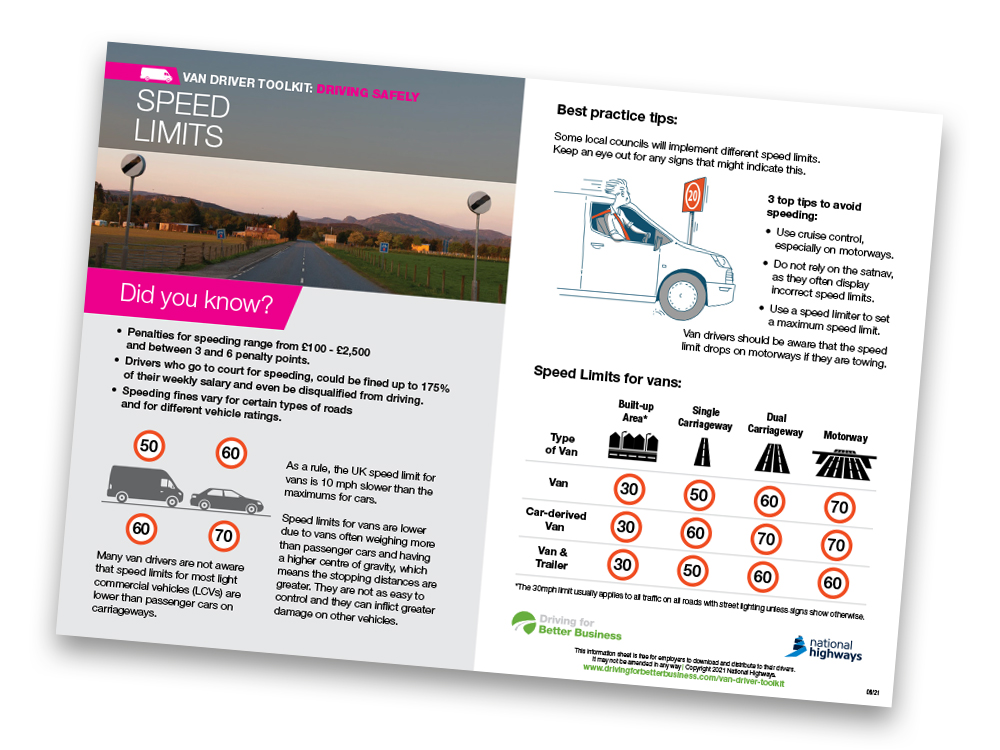
Speed – does everyone understand their responsibilities? Driving is, for most people, the most dangerous activity they do. Your Call to Action:

  • Ensure you have the right driving for work policies in place 
  • Ensure everyone involved – managers, supervisors as well as your drivers – are aware of their responsibilities
  • Ensure your drivers understand there are different speed limits for the different vehicles they may have to drive

National Highways

Fleet Safety Focus – Speed

Vehicle Roadworthiness – does everyone understand their responsibilities? The legislation on vehicle roadworthiness is very clear – your vehicle must be safe and roadworthy at all times. It’s also important to know that the law applies to both the driver and the operator – they are what as known as jointly and severally liable. In other words, the employee (the driver) and the employer (the operator) have joint responsibility for vehicle roadworthiness.  

National Highways

Fleet Safety Focus – Vehicle Roadworthiness

Weather Conditions – does everyone understand their responsibilities? Driving is, for most people, the most dangerous activity they do. Changes in weather conditions could easily make driving more dangerous, whether these are seasonal changes or weather events. Be sure your drivers are aware of the additional risk that comes with heavy rains, strong winds, fog, high temperatures, low sun, ice and snow – and that they adapt their driving style accordingly.

National Highways

Fleet Safety Focus – Weather Conditions

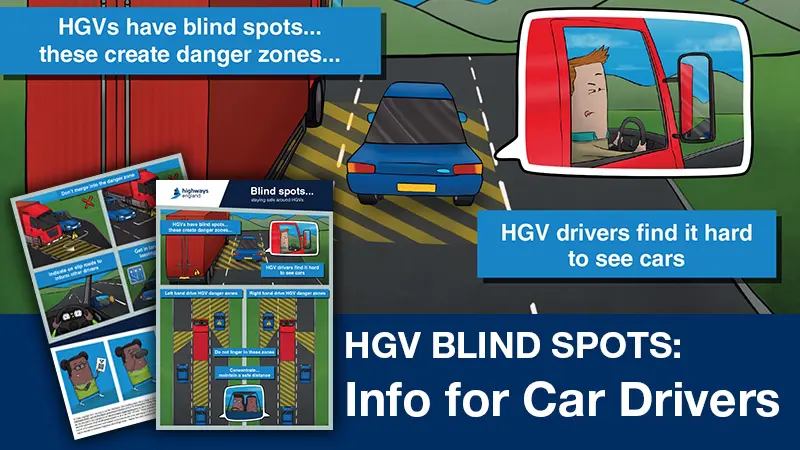
This blind spot information leaflets is aimed at car drivers, encouraging better awareness and safe driving around commercial vehicles.

National Highways

HGV Blind Spot Info for Car Drivers

National Highways

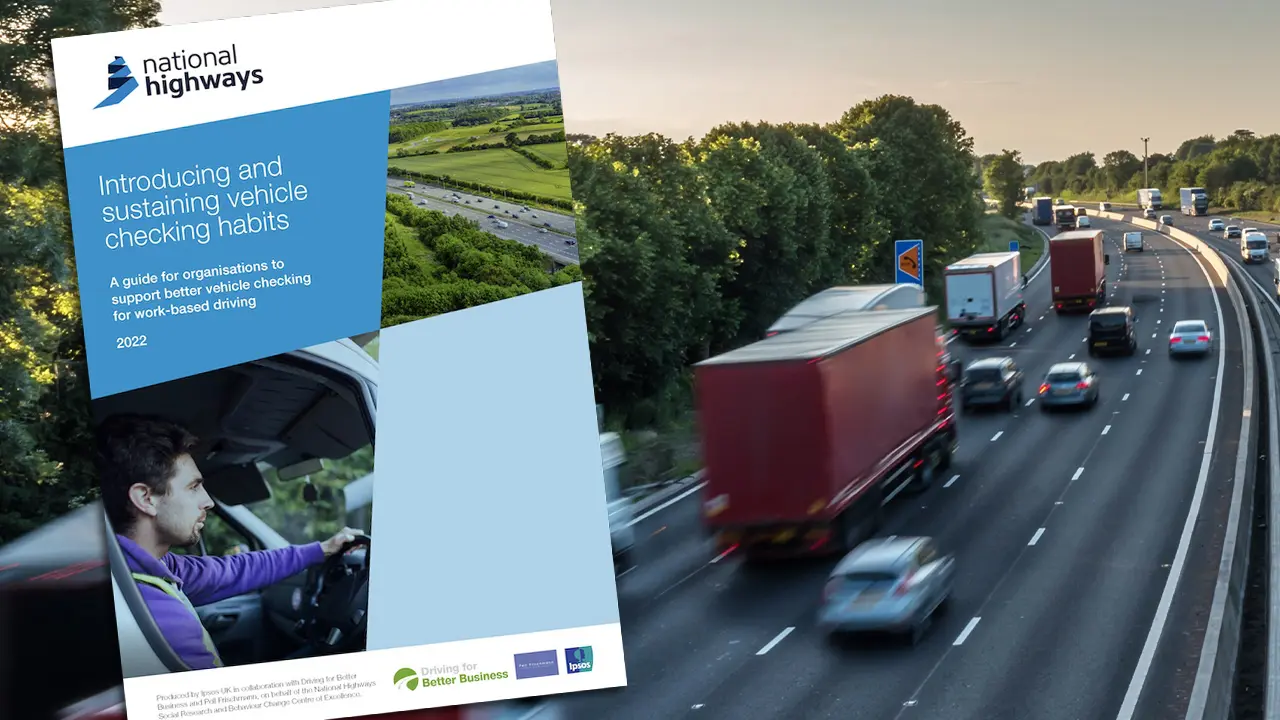
Introducing and sustaining vehicle checking habits

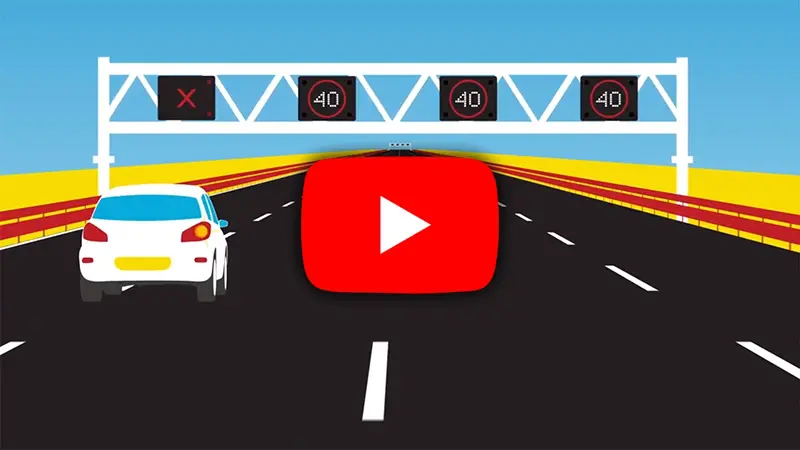
If you see a red X on a motorway, this means that you should not use that lane. This could be due to an incident, roadworks or a breakdown. It’s there for your safety and the that of others on our network.

National Highways

Know what to do when you see a red X

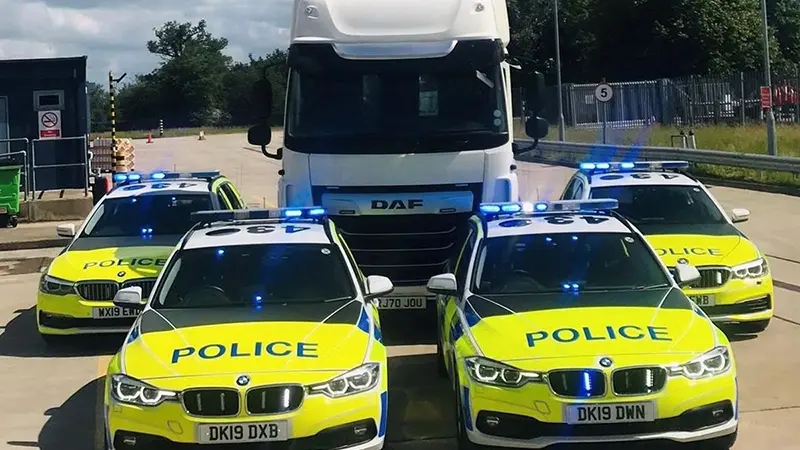
Three plain white HGV tractor units have been loaned out to police forces by National Highways to help improve safety for drivers on the strategic road network in England.

National Highways

Operation Tramline
X
Go to Top